
INSIGHTS (on leadership/self-leadership)
Every organization would love to be more creative, yet struggles to overcome creativity killers such as rigid hierarchies, overly tight deadlines, and risk-averse cultures.
But the biggest creativity killer of all might surprise you.
It’s the cult of efficiency.
As creativity expert and author, Tony Martignetti, highlighted in Fast Company:
“Organizations optimize for productivity, predictability, and speed—often at the expense of curiosity and imagination. Creativity, by its very nature, is inefficient. It requires space for ambiguity, exploration, and even failure. Yet, in many workplaces, the pressure to deliver immediate results leaves no room for the wandering that leads to breakthrough ideas.”
I’ve been there, where the pressure to deliver “today’s payroll” cripples the ability to create tomorrow’s payoff.
Here’s the thing. Creativity isn’t something you manage. It’s something you design for. And one of the best ways to do that is to create an environment where healthy friction is the norm. This is generated when “intellectual collisions” happen (as Martignetti calls them), where differing perspectives are brought together to discuss ideas, and where permission to explore the unknown exists and is openly rewarded.
Bottom line, creativity isn’t a process; it’s a plan.
IMPERFECTIONS (a mistake many make)
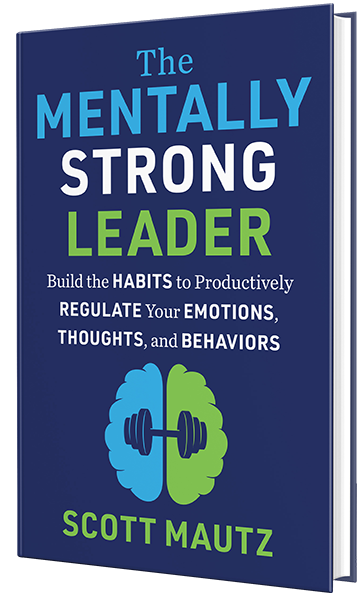
I’m all for setting clear expectations and giving clear guidance. Even talented people need this input. In fact, I share a powerful tool for doing this in my most recent book, The Mentally Strong Leader.
But Steve Jobs highlighted one of the bigger mistakes that leaders make on this front. As captured in the book, The Missionary, Jobs said:
“It doesn’t make sense to hire smart people and tell them what to do; we hire smart people so they can tell us what to do.”
He’s right. But the issue is twofold:
a) many leaders get too prescriptive
b) many smart people are disincentivized to speak up
I’ll focus on the second problem here. One of the biggest reasons people won’t speak up is fear of criticism from others – especially their boss. That’s where “the movie critic metaphor” comes in to help you encourage people to speak up. I’ll explain.
Albert Williams, a renowned film critic, once gave a speech on why critics of all kinds (film, theater, music) do what they do. It’s not because they’re mean-spirited and enjoy tearing down other people’s work. Nor are they obsessed with saving you from spending your money on something not worth it. Williams explained:
“Critics believe the creators of art really want feedback, of any kind. They see their role as a teacher, and teachers challenge the material they’re discussing. They see themselves as reporters, boosters, and skeptics – all to create better art.”
Here’s the power in this. Think of yourself for a moment, and the defensiveness that creeps in when someone gives you criticism. What if you saw that criticism as coming from someone who wants to help create better art–in the form of a better version of you?
Now, what if you could help your team of smart people see criticism the same way? To help that along, try this. Before meetings where you want everyone’s input, use the movie critic metaphor and help your team understand that if you offer criticism or pushback on what they say, it’s all in your desire to create “better art” – a better outcome ultimately (like the film critic). You want to help them, and the idea, improve.
In other words, you want to embolden them to speak up and tell you what to do.

IMPLEMENTATION (one research-backed strategy, tip, or tool)
Ever have an indecisive boss? Ugh – it’s the worst, for so many reasons.
But you’re not helpless if you’re cursed with this affliction. You can enhance your boss’s ability to make decisions (without making them feel manipulated) by organizing, simplifying, and influencing the context in which they make decisions. To do that, do the following five things. They serve as a “Context Checklist”:
• Decisions are often made to overcome a problem. Spend as much time helping your boss define the problem as you do providing solutions—a problem well-defined is one decisively solved.
• Present a clear set of options with reasons and watchouts for each—offering choices increases the likelihood that people will actually pick one.
• Make the case for your preferred choice, but be honest about the shortfalls—this shows your thoroughness and puts the boss in solution mode versus “seeking more info” mode.
• Anticipate questions your boss will have about any decision-making input you give—doing so provides instant added context and speeds decision-making.
• Provide perspective from sources they’d seek out anyway. If you know your boss tends to seek out confirmation or perspective from the same sources before deciding, gather that perspective for them in advance.

Leave a Reply