INSIGHTS (on leadership/self-leadership)
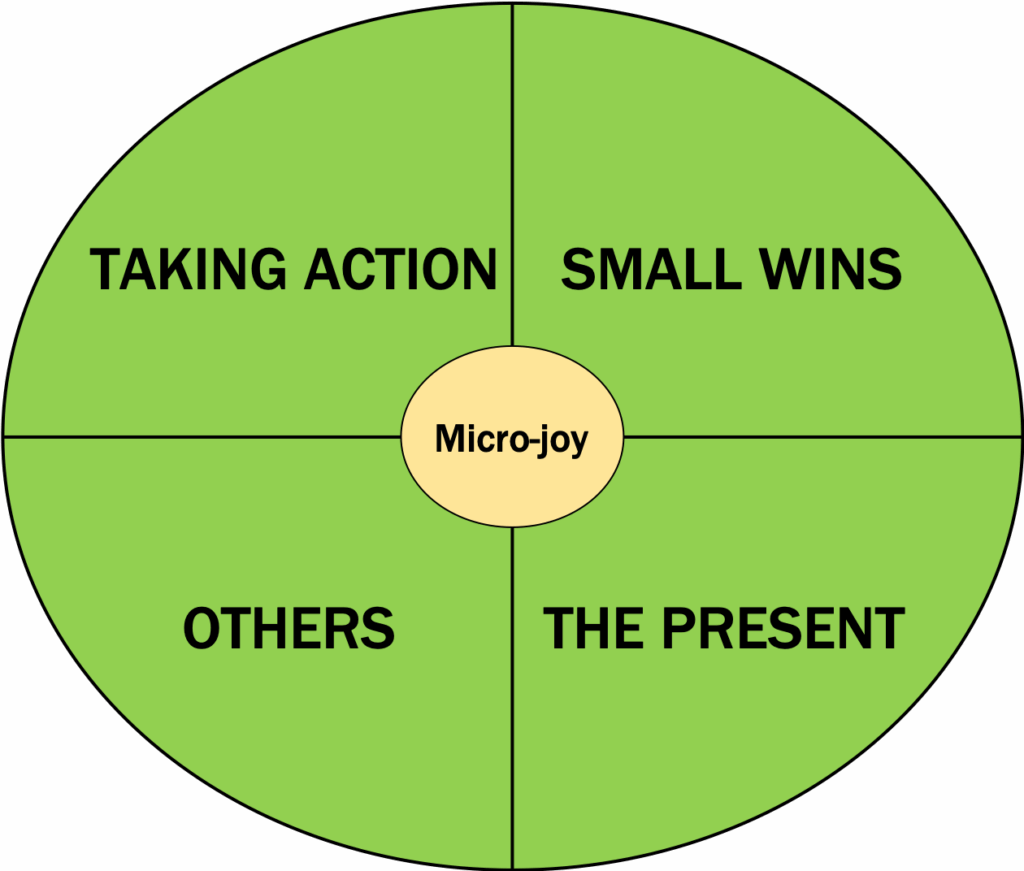
I’ve written before about the importance of trying to find micro-joy in your life, tiny little slices of happiness, presence, and mindfulness you find in the midst of difficulties. I came across a piece recently that talked about how to achieve micro-joy in a way that I liked. Do so by focusing on four things; taking action, small wins, the present, and others:
Here’s Harvard research to back this up:
On taking action: Harvard researcher Rosabeth Moss Kanter highlights the importance of taking action, it creates small wins which pave the way for bigger wins (see below), accomplishments come in pieces (one action leads to another leads to accomplishment), and actions produce energy and momentum.
On small wins: A three-year Harvard study showed that people are more motivated by making small, daily progress against reasonable goals than they are by achieving big goals. This feeling of moving forward, called the Progress Principle (popularized by Harvard’s Teresa Amabile), creates daily bursts of mini-joy.
On the present: Another Harvard study showed that a whopping 47% of the time, you’re engaged in something other than what’s happening right in front of you. And other research shows that a wandering mind is not a happy mind.
On others: Harvard research shows that helping others is good for mood and memory. Another study showed that when people helped others, 45% felt a greater sense of purpose, 36% felt happier, 26% experienced greater mental well-being, 20% improved their self-esteem and self-confidence, and 11% said they were less stressed.
IMPERFECTIONS (a mistake many make)
Feeling overwhelmed at work? Ask yourself if you’re making the mistake of assuming your workload is always additive (every new piece of work just goes on top of the pile), with the pile never shrinking unless you complete something to lessen the load. An effective counter to this track of thought is to imagine your workload as fluid by design. Meaning, you should expect your workload to not stay constant, but to expand, or contract, depending on the conditions. For example, your workload will likely expand as you approach the launch date for that new product. But it should contract a bit after that big annual meeting you were putting in lots of hours preparing for, allowing you to take a breath, celebrate, and re-energize.
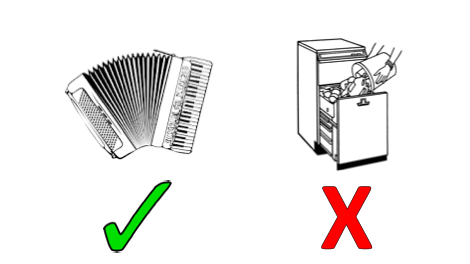
If it helps, think Accordion, not Trash Compactor. A trash compactor squishes trash into smaller cubes. Just as when you’re working hard to make your “total cube of work” smaller. That’s good. But rigid. And the constant grind can be exhausting and overwhelming.
Instead, think of your workload as an accordion. An accordion is a musical instrument played by expanding and contracting it. Likewise, your workload should expand when things are intense, and contract at other times to give you a breather – constantly ebbing and flowing in tune with the rhythm of work. Sometimes you add more work, other times you take some away, or slow down a bit to recharge – all in service of ultimately delivering on established priorities, without burning out. Accordion, not Trash Compactor.
IMPLEMENTATION (one research-backed strategy, tip, or tool)
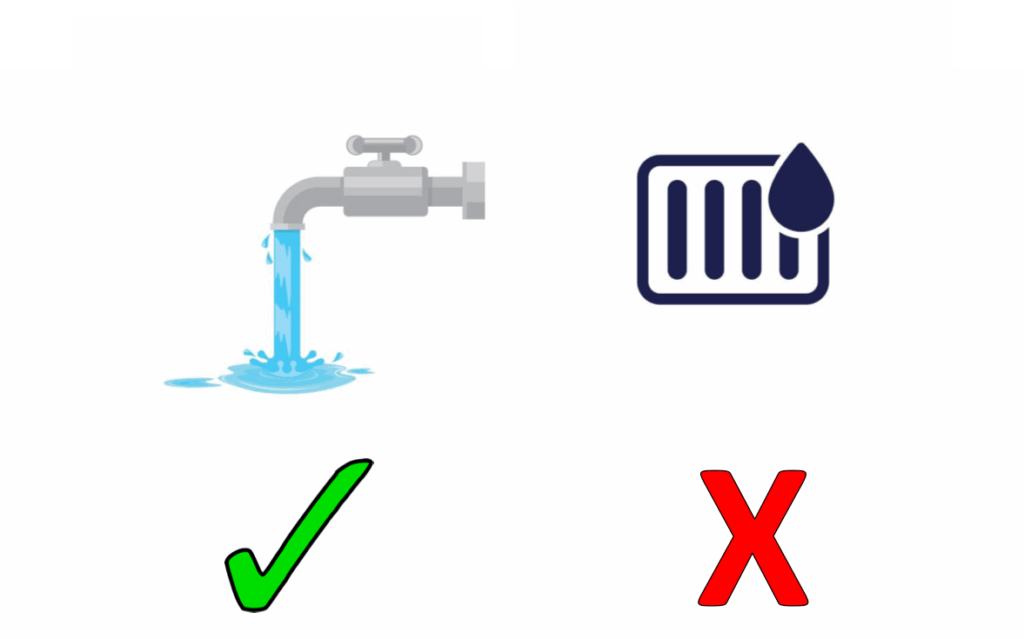
Want a simple way to hold yourself (or others) accountable to being a team player and/or great team contributor? Try what organizational psychologists call The Plumbing Test. It’s simple; ask yourself, or others, in any rhythm that feels appropriate (daily, 1x/week, first of the month, etc.) the following one-question:
Am I acting like a faucet or a drain?

Leave a Reply