INSIGHTS (on leadership/self-leadership)
If you aren’t experiencing volatile times at work, at some point, you will. So, what’s the key to leading in uncertain, dynamic times?
Be an amplifier.
Meaning, in times of volatility, when things are moving fast, change is happening, and things are uncertain, it’s essential to get actively involved as a leader to help amplify the effort and communication it will take to achieve your goals. To cut through all the noise and distractions effectively, be an amplifier in the following 6 ways:
1. Make what needs to be heard, heard. You do so by investing the time it takes to overcommunicate, whether it’s to reinforce, reassure, or clarify. Research shows that the average important message from leaders has to be communicated at least seven times. Even more so during dynamic times when there’s a lot of competing information or distraction in the air. The point is, you’ll need to tell your people what you need to tell them WAY more than you think you do.
2. Bring the micro to the macro. In dynamic times, people not only need the WHAT reinforced (the goals, what you’re collectively trying to accomplish, how their work fits into the bigger picture), but they likely need help on the HOW as well. HOW do we get there when the context or environment in which we’re operating is in flux?
It might be as simple as amplifying their execution by providing more resources, or increasing the time you spend reviewing detailed plans to help keep the organization on track – perhaps being a little more hands-on than you normally would. The point is, in volatile times, it’s often not enough just to reinforce broad sweeping goals; you might have to provide more granular assistance.
3. Amplify adaptability and agility. When winds are swirling, it’s important to be able to adjust the sails as needed. This means being open to new ideas or opportunities that emerge, challenging the status quo, and potentially modifying plans. Note, it’s not about constantly changing directions to go whichever way the wind is blowing. It’s about striking a balance between watching and waiting, and acting and adjusting.
4. Share perspective and framing. Volatility can bring great discomfort, in many ways, so easing that discomfort as much as possible is essential. Of course, you won’t have all the answers or be able to alleviate every ounce of unease that arises. This is about sharing your own experiences from similar situations you’ve experienced and framing how employees should view the volatility they’re going through. An organization that’s more at ease can focus more effectively on what needs to be done.
5. Amplify capabilities by coaching. That is, by investing in your people. I’m talking about taking the time to teach them in teachable moments, to help build their skills, knowledge, and competence. Plain and simple, keep people learning and growing, and you’ll keep things going in the right direction.
6. Amplify your efforts to assist success versus avoid failure. This is how the best amplifiers spend their time. Constantly ask yourself, “What else can I do to proactively assist success in these volatile times?” (versus focusing on how you can avoid any possible downside to the dynamic environment you’re in).
So, amplify in these six ways, and times of volatility will be times of victory.
IMPERFECTIONS (a mistake many make)
A quote by Irish playwright George Bernard Shaw recently stopped me in my tracks:
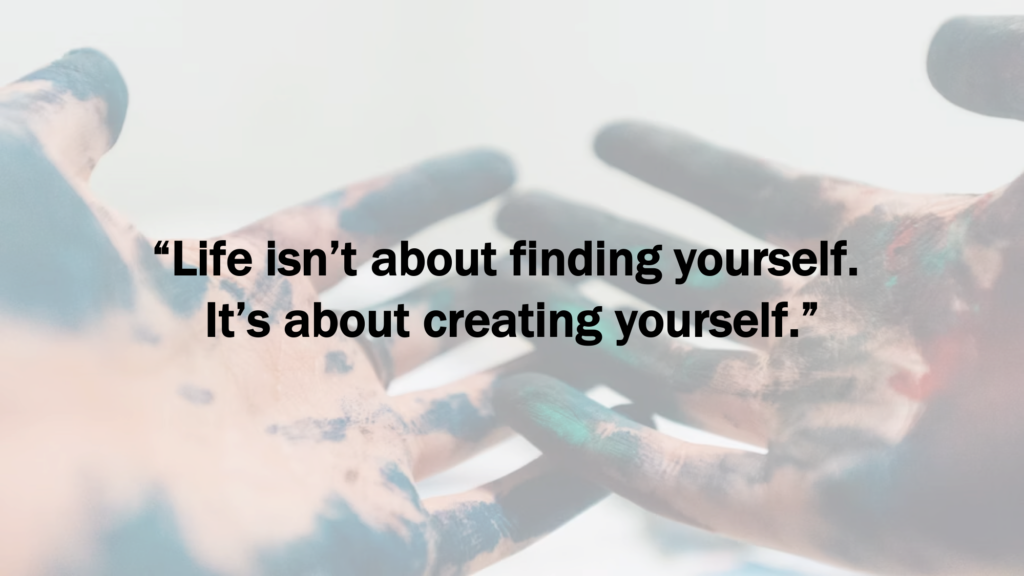
“Life isn’t about finding yourself, it’s about creating yourself.”
So often, especially when we feel unfulfilled, we set out on a journey to discover our true selves. To find our calling. To uncover the mystery of who we actually are or who we’re destined to be. To reveal the identity that will finally unlock our true happiness.
It’s a journey that can be filled with exasperation and elusiveness. But, what if, instead of searching for ourselves, we built ourselves? From what we are to what we yearn to be? Brick by brick. Layer by layer. That would require starting from a place of acceptance, that you’re right where you’re supposed to be, with a perfectly solid foundation –as opposed to searching in the wilderness for that one path, assuming that, along the way, the path you’re currently on is incorrect. Every new experience you take on, each new thing you learn, every bit of progress, each setback you suffer through and learn from, it all becomes part of what you’re building. The you that you want to become.
It’s an important nuance. Creating yourself puts the effort into step-by-step tangible action. Finding yourself focuses on searching for answers that might never come. So, build it, and it will come. The you that you intend will arise before your eyes.
IMPLEMENTATION (one research-backed strategy, tip, or tool)
The most effective tips for prioritizing are always the simplest. The “20/20 Vision Principle” is no exception.
Before you start your day, commit to using your “20/20 vision” that day, meaning, commit to work primarily on the 20 percent that adds the most value, while keeping the next 20 percent in sight. Stay laser-focused on that first 20%, then, if your attention drifts to something that isn’t in that first 20%, ask yourself if it falls into the next 20% most important. If it does, mentally file it away as work to get to if you can. If it doesn’t meet even that second 20% criteria, then it’s not worth your time and attention that day. Period.
So, think 20/20 vision to prioritize with great foresight.

Leave a Reply