INSIGHTS (on leadership/self-leadership)
Want to play a bigger role in influencing strategy at work and be seen more as a strategic thinker? First, resist the temptation to default to “Strategic thinking is the last thing I have time for.”
Then, it comes down to the strategy jobs to be done.
Meaning, be aware of, and toggle between, the three strategy jobs to do.
1. Cascade top-down strategies. This is about fully implementing top management’s intentions – but it’s not just acting like a go-between. It’s about fully understanding the strategies, then sharing a well-thought-out perspective to gain employee commitment when translating the strategies into operational tactics. To exaggerate a bit, it’s the difference between gathering your team to share “Here’s why we’re being asked to do this, why it’s so important, and how we should go about it,” versus just forwarding an email with “directives from above.”
2. Shape top-down strategies in advance. Do so by analyzing relevant information, assessing opportunities and threats, and sharing your perspective and recommendations with decision-makers above you before the strategies are set.
3. Champion “on the ground” strategies. These are strategies you and your team proactively create, sell “up the chain” if needed, and ultimately implement, based on what you’ve learned by being closest to customers, consumers, and competitors. This strategy “job to do” is the most often missed or underserved, which is a travesty, as one study showed that a whopping 80 percent of strategic projects initiated by top management failed, while 80 percent of those initiated by mid-level managers succeeded.
IMPERFECTIONS (a mistake many make)
One of the hallmarks of Steve Jobs’ legacy is his incredible productivity, driven by his laser-like focus. He avoided a mistake that’s all too easy to make – equating productivity with the number of things you get done in a day. Jobs had a different take, believing in the signal and noise rule, which was simply this:
There are only three things you need to get done each day (the signal) – the rest is noise.
First, select the right signal. At the start of your day, ask yourself, “What are the three things I must accomplish today?” Then, be brutal about saying “no” to anything that gets in the way of accomplishing those things. He’s converted many a hyper-successful person to this philosophy, including entrepreneur and venture capitalist Kevin O’Leary.
Science backs up Jobs’ assertion. Research shows that task-switching, switching from one task to another, can slow down productivity by up to 40 percent. And research by UC Irvine professor Gloria Mark showed that it takes an average of 23 minutes to refocus after an interruption.
So, tune into that signal, and don’t tune out.

IMPLEMENTATION (one research-backed strategy, tip, or tool)
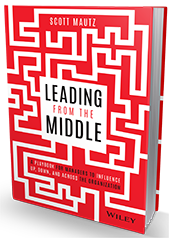
A reader recently reminded me of something I shared in Leading from the Middle. It has to do with building trust.Every action you take gets sorted into one of two buckets.
You’re either building trust or eroding it.
Period. This is a simple yet powerful self-screener, especially when you’re trying to build trust with a team or a key teammate. To help put as many deposits as you can in the “building trust” bucket, know that research shows the three best ways to visibly reinforce trust are a) revealing your thoughts about important issues and encouraging others to raise issues, b) admitting mistakes, and c) acting consistently with your (and your company’s) values.

Leave a Reply