
INSIGHTS (on leadership/self-leadership)
I write a lot about how to be a better communicator. I recently came across work from an author and Wharton lecturer that I really liked – it put into different words a lot of what I talk about. Want to communicate clearly? Keep these three principles in mind:
1. Manage the Cognitive Budget. Imagine your audience has a limit to the amount of information and insight they can take in; a “cognitive budget.” Judge everything you include in your communication by the standard of, “Is this worth spending my budget on?” It’s a smart, simple way to stop overpacking your communication with too much – one of the most common errors people make in communicating. If you’re uncertain whether or not something is worthy of being included, it probably means it’s “not in the budget” and should be cut.
2. Speak to Shared Values. People tend to miss this point when they want to come across as visionary or innovative; when they’re purposefully trying to forge an identity distinct from their audience. But it just ends up alienating them and causing backlash. A better approach is to ground your talk in things everybody already believes in, such as better products, faster, and cheaper. If something is truly innovative, people need it rooted in something familiar.
3. Discern the Type of Conversation the Audience Wants to Have. There are three types of conversations to have: facts and analysis, emotional, and identity-based (who are we?). When the troops need a pick-me-up, just facts and analytics won’t do. When they need a firm strategy, an emotional rallying cry speech won’t do. You get the idea. Match the situation to the conversation type required.
IMPERFECTIONS (a mistake many make)
50% of adults say fear of failure has kept them from even REVISITING, let alone REALIZING, their goals. It’s more than a common mistake; it’s the norm. So, it begs the question: how do you overcome fear of failure?
By following the BRAVE acronym:
Burn the boats. When sea-bound Greek armies landed on enemy shores, they’d burn their boats before entering battle. Thus, there was no turning back. Pushing past fear of failure sometimes means simply taking the first step in your plan. Fear of failure disappears when you realize you can’t hide behind it anymore.
Revisit your standards. Perhaps you’re fearful of not clearing an unreasonably high bar you’re holding yourself to. Reasonable success goals dissipate fear.
Ask: “What am I really afraid of?” Is it realistic or are you catastrophizing? Is the true worst-case scenario actually manageable? What we’re afraid of is often some form of shame, which is toxic because instead of feeling bad about your actions (which is guilt) or your efforts (which is regret), shame makes you feel bad about who you are. Recognize that failure is nothing to be ashamed of, it means you’ve put yourself out into the world in a new way, which is commendable.
Validate your assumptions. The lack of clarity in uncertainty is replaced with assumptions, often incorrect and unhelpful. Identify assumptions you’re making that are driving fear of failure, and challenge them.
Examine past failures. You’ve certainly experienced failure before and yet still turned out okay. You likely even grew from it. Don’t underestimate your resilience.
IMPLEMENTATION (one research-backed strategy, tip, or tool)
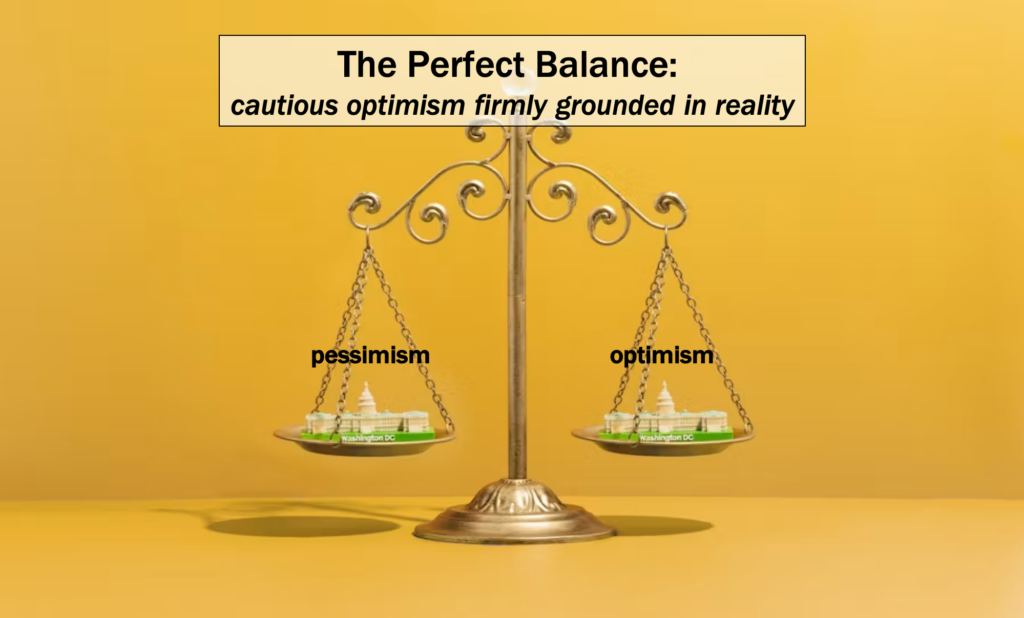
What’s the key to successful living? Neuroscience research from University College London shows that it’s balancing the two big “isms”: pessimism and optimism. Too much pessimism leads to a miserable life, while too much optimism can lead to risky behaviors (like unwise financial decisions or optimism-driven overconfidence that leads to reckless behavior). The key is to achieve a balance. But don’t think of pessimism and optimism as separate “on/off” switches. They both lie on a continuum, and should be dialed up or down as needed based on the situation. So, what is the optimal equilibrium, then? The researchers say it’s “cautious optimism firmly grounded in reality.”


Leave a Reply