INSIGHTS (on leadership/self-leadership)
We all want to “just be ourselves” at work, right? Of course, the ability to be authentic is essential to one’s job satisfaction, with one caveat, as pointed out by Columbia University organizational psychologist Tomas Chamorro-Premuzic. The best leaders understand that their desire and right to be themselves must be balanced with conscientiousness and consideration toward others. That requires an oft-overlooked skill – self-editing. Developing this skill allows you to, in turn, develop your identity, broadening and enriching it along the way. Chamorro-Premuzic offers eight strategies to master the art of self-editing (edited a bit for brevity):
1. Don’t believe your own hype. Confidence is useful; self-delusion is not—it stunts learning. Good leaders act like their reputation is a rumor they still need to verify.
2. Remember that it’s about your reputation, not your self-perception. In other words, it’s not how good you think you are—it’s how good others think you are.
3. Pause, then react. Emotional self-regulation—thinking twice before sending that email or responding in a heated discussion—is often the difference between credibility and regret.
4. Curate what you share. Transparency doesn’t mean oversharing. The best leaders disclose enough to build trust but not so much that it burdens others. Edit for relevance, not confession.
5. Seek out editors. Every great writer has an editor; every great leader should too. Surround yourself with people who challenge, critique, and occasionally burst your bubble. If everyone around you nods, you’re in an echo chamber, not a team.
6. Balance passion with predictability. Enthusiasm is energizing, but mood swings are exhausting. Your team shouldn’t need to forecast your emotional weather. Reliability is charisma’s less exciting but more mature sibling.
7. Audit your habits. What you do repeatedly—how you listen, decide, interrupt, and delegate—forms how you’re seen as a leader. A little self-awareness and intentionality can go a long way here to creating the leadership brand you want.
8. Edit forward. View your leadership style as a draft in progress. Ask: Could I do with less airtime now? What version of me does my team need next—what context must I consider? Continuous revision is how the best leaders evolve.
IMPERFECTIONS (a mistake many make)
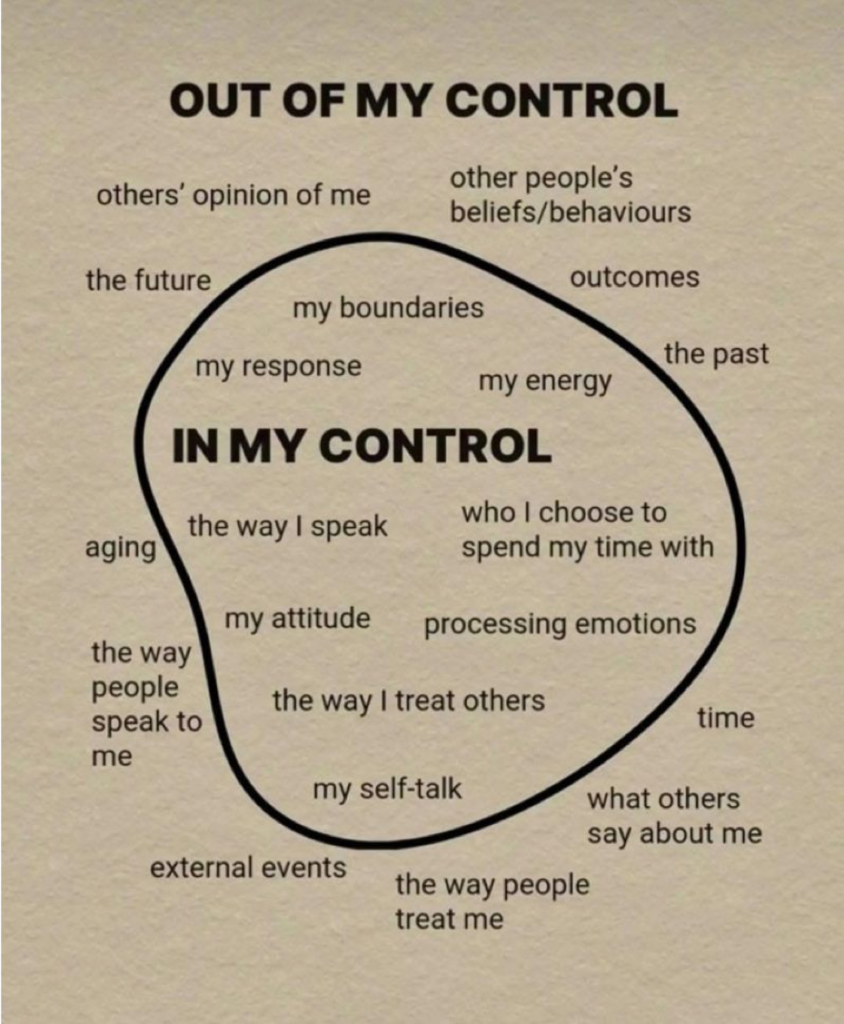
It’s easy to lose sight of what’s in your control and what isn’t. It’s easy to get fixated on the latter rather than being disciplined and zeroing in on what you can control. That’s why I like this visual from Wharton organizational psychologist, Adam Grant:
IMPLEMENTATION (one research-backed strategy, tip, or tool)
Want to get better at listening? Try the BARN door method – as in, it helps you keep your attention locked-in so it won’t wander out the barn door into the pasture of distraction. BARN is an acronym that reminds you to Bring Attention Right Now. If what currently has your attention is not the person right in front of you, it’s time to redirect. It’s a reminder to close the barn door mentally. Write the word BARN on the top of your 1-on-1 agenda or say it to yourself before connecting with a loved one. They’ll wonder at how your attention never wanders.

Leave a Reply