INSIGHTS (on leadership/self-leadership)
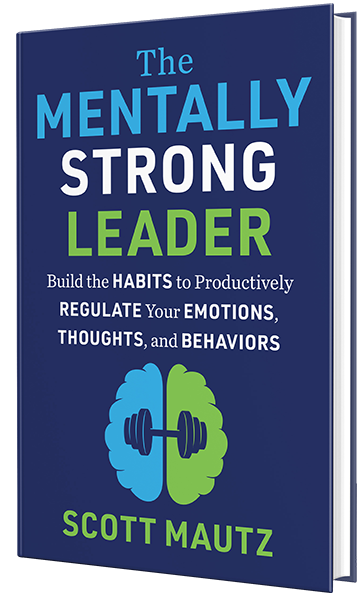
Quite often in life, it’s the smallest things that can have the biggest impact. That’s true when it comes to embracing habits that help you perform better as well; small things matter. That’s why I was drawn to a recent article published in The Athletic; it shared three tips from sports mental performance coaches that are very much in line with what I teach and have written about (in my book The Mentally Strong Leader). Try any of these to help improve your focus, attention, and ultimately, your performance at work (or anywhere).
1. Take small breaks to quiet your brain and body. Use this time to just let your thoughts happen. But not all thoughts are created equal. Imagine that negative thoughts are floating in a “thought bubble” outside of your body, not connected to you. You don’t have to “take them in” because they aren’t there to help you. After 5 minutes of letting those negative thoughts just sit there, outside your head, imagine the wind carrying them away where they can no longer do any harm.
2. Journal, with a purpose. Traci Statler, a mental performance coach for the Philadelphia Phillies, asks players to do POV journaling:
- P stands for plan. The athlete must come up with a plan every day. It must be a granular, achievable goal. The biggest mistake here is setting goals that are too far in the distance, which means they can’t be achieved in that day.
- O is the outcome of that day’s goal. Did your plan work? Why or why not?
- Value of that day. What was accomplished? What did you learn?
3. Focus on behaviors and actions, not feelings. It’s about getting out of your head and into your body. What concrete, physical things are you actually doing to achieve your goal? Of course, your feelings are valid, but they often don’t help you perform better.
IMPERFECTIONS (a mistake many make)
Too often, we make the mistake of striving to be interesting, rather than interested (as in, interested in what others have to say). Warren Buffett has a neat trick to address this.
Author Suzy Welch told CNBC: Make It that she was seated next to the Oracle of Omaha at a dinner party. Buffett quietly pulled a 15-minute egg-timer out of his pocket, placed it between them, and said:
“That’s how long I get to talk with you before I lose you to your partner on your left. And not a minute shorter!”
When the timer went off, each turned to their other side, until the timer went off again 15 minutes later. When Welch and Buffett turned toward each other again, Welch was greeted with a “Goodie, you’re back!” from the icon. As Welch said, “He (Buffett) was the most important person in that room – and yet, he made me feel like I mattered as much as he did.” Welch went on to say the experience changed the way she viewed leadership. It taught her how powerful it is to show others that you care, that you value them, and that you’re listening.
To me, this is the platinum rule of leadership, and of being a good human being. Focusing intensely on being interested rather than interesting. Showing people they’re heard and then acting on what they say. Believing that everyone deserves to feel valued and valuable, worthy and worthwhile. The privilege of leadership makes you a conduit — an instrument that can amplify the point of view, thoughts, ideas, feelings, opinions, hopes, and dreams of those that work for, and with, you. Buffett’s egg timer is a physical manifestation of this spirit. It’s a quirky approach that says “You’re important enough to me that we’re going to put a guardrail in place to keep us on course with our connection.” I encourage you to think of an egg-timer in your head before engaging with others in the future. Be fully focused and tuned in until the “sand” runs out and it’s time for the next conversation.

IMPLEMENTATION (one research-backed strategy, tip, or tool)
Research shows the most stressful time of day on average is 7:23AM – when all the morning stressors have kicked in (you’re scrambling to get ready for work, trying to feed the kids, worrying about the day ahead and all you have to do, and so on).
In my popular course One-Minute Habits for Success, I share a 3-word strategy for having a good start to your day:
Ditch, switch, enrich. I’ll explain.
Start your day ditching, or leaving behind, unhelpful thoughts or hang-ups that have been weighing you down. What must you move on from that keeps distracting you, aggravating you, or causing you to feel bad about yourself?
Then switch to something more positive by asking yourself, “What’s the most important thing to accomplish today that will move me towards my goals?”
Now, enrich. Commit to learn something that day, to experience something new, to do one thing that will make your day better – to enrich yourself. Commit to read just a few pages of a book that interests you, read one article during lunch on a topic you’re trying to build expertise on, or go for a stroll in nature right in the middle of your day. You get the idea.
So remember, ditch, switch, enrich. A three-word morning ritual for more success, less stress.

Leave a Reply