INSIGHTS (on leadership/self-leadership)
A recent study showed that 79% of in-office workers and 88% of remote workers feel they must prove they’re being productive. 42% of hybrid and in-office workers say they come to the office just for visibility. This has created an epidemic, a focus on…
busyness over impact.
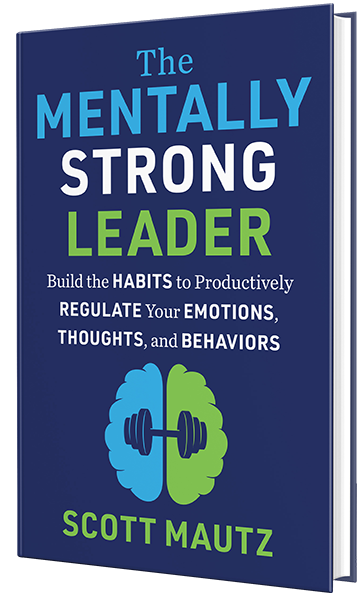
The implications on productivity are obvious. To counter this tendency, use the POWER tool. I’ve shared this before (including in my book, The Mentally Strong Leader), and the reaction has been so positive, I feel compelled to share it again within the context of the study I just mentioned.
POWER is an acronym for the five, science-backed, most proven ways you can maximize the impact you have in your work (and in life).
Pinpoint what only you can lead – If you ask this question, “What can only I lead?”, I guarantee there’s an answer to that question.
Own a change sorely needed – you see something that needs to be changed, change it. Don’t wait for someone else to do it.
Work on a system vs. in a system – of course you need systems/processes/procedures to get things done, but we’ve all experienced a system, a process, a procedure, that has outlived its purpose, or simply isn’t as effective as it should be. Change it.
Establish an unmet need to fill – or a deed that needs doing.
Remove a barrier for someone – or solve a circumstance.
So, remember the POWER acronym to power up your impact.
IMPERFECTIONS (a mistake many make)
Anyone who has attempted to climb Mt. Everest, the world’s tallest peak, knows of the 2 PM Rule. It’s a life-or-death survival strategy. Reach the summit by 2 PM, at the latest, or turn around. Even if you’re close, too bad. Retreat and begin your descent. It’s why the attempt to climb Everest begins in the middle of the night – you’ve got until two o’clock that day to reach the summit. Why?
Everest weather gets wildly unpredictable, especially in the afternoon when temperatures plummet, winds strengthen, and visibility can vanish in minutes. Begin your descent too late and you can get trapped in the “death zone,” the area above 26,000 feet on the mountain where the air is so thin it requires supplemental oxygen.
As Shelly Abramovich, a writer for Explore puts it, “Knowing when to turn back is one of the most critical decisions you’ll ever make.”
In life, we often don’t know when to retreat from a goal we’re pursuing. As much as I write about resilience and overcoming adversity, it’s also important to know when it’s time to move on from a goal, or idea, or project. But how do you know when it’s time? What’s the 2 PM hard stop rule?
Try this. Move on (or at least adjust course dramatically) from your goal, idea, or project when any of these things are true:
1. The risk is greater than the reward. Has the risk of proceeding (financially, socially, mentally, resource-wise, time-wise, health-wise) simply become so great that it outweighs the reward of sticking it out?
2. The opportunity cost is too high. When trying to fix or overhaul the idea becomes so time and resource-intensive that you can’t get to other mission-critical things, it might be time to walk away.
3. Interest is waning. In your heart of hearts, when you’re honest with yourself, even though you’ve put so much into it, are you no longer as passionate about the goal/idea/project? If not, it makes it very hard to sherpa it to true success.
4. It no longer passes the smell test. When you step back, if you’re honest with yourself, is the idea not a big one anymore? (perhaps due to a changing environment) Does the goal feel empty? (perhaps given changes in circumstances) Does the project seem to be far less critical? (perhaps because the trend that spurred it is no longer relevant)
Abramovich wrote, “The mountain is in control, and climbers must respect it.” Sometimes, the universe is in control, and you’re not, and you must respect that. It can be hard to say goodbye because of what you’ve already put in. But you have to know when to come off the mountain.

IMPLEMENTATION(one research-backed strategy, tip, or tool)
Let’s give equal air time to overcoming adversity (since I just wrote about knowing when to throw in the towel).
Remember this: It’s about the comeback, not the setback.
To assist you in the comeback, try the 3P Exercise (something I share in my LinkedIn Learning course, “One Minute Habits for Resilience”). Write down the following three statements on an index card and take 60 seconds to recite them to yourself when you need a resilience boost.
People who are resilient…Perceive effects of bad events as temporary, not permanent.
For example, say you’re going through a reorganization at work, one that’s poorly executed and is creating uncertainty and chaos. You could choose to believe that you’ll be in that state forever, or recognize that the discomfort is temporary, because the event is temporary. The point is, if you see an unfavorable event as temporary, that means there’s an end to it, which means there’s a beginning to something new that follows. And that something new includes a better you, having drawn from the prior experience and becoming stronger for it. In other words, there’s always something in life to look forward to.
People who are resilient…Prevent setbacks from affecting other areas of their life.
For example, one client company of mine lost a substantial portion of its facilities to a devastating fire. It meant hundreds of employees had nowhere to go to work or any work to do. But instead of laying employees off, which would have affected their lives in many other negative ways, the company kept paying them while they rebuilt, putting them to work in the local community on special projects. The company minimized the amount of disruption the adversity caused and helped employees persevere through it all. You can apply this mindset too, by not letting the impact of a negative event affect your outlook in other parts of your life.
People who are resilient…Pivot to whatever new approach is needed.
They turn quickly and decisively, but not carelessly, towards what needs to happen next, without getting hung up in the past or clinging to the way things have always been done. I do plenty of things wrong in life, but I can count my ability to adapt and pivot to a new direction when needed as a strength. The key is to recognize that everything in life is a work in progress, and sometimes the path to success is not the one you started down. It takes a willingness to stay open-minded and resist the temptation to keep plowing forward because of work you’ve already put into something (see the “Imperfections” section above). Your past efforts are in the past, but they’re not wasted. They HAD to happen to lead you towards what’s next.
So, take just a minute for the 3P Exercise and you can add a fourth p – increased perseverance.

Leave a Reply